Files & Folders
Create, rename, move, monitor, compress, and archive files.
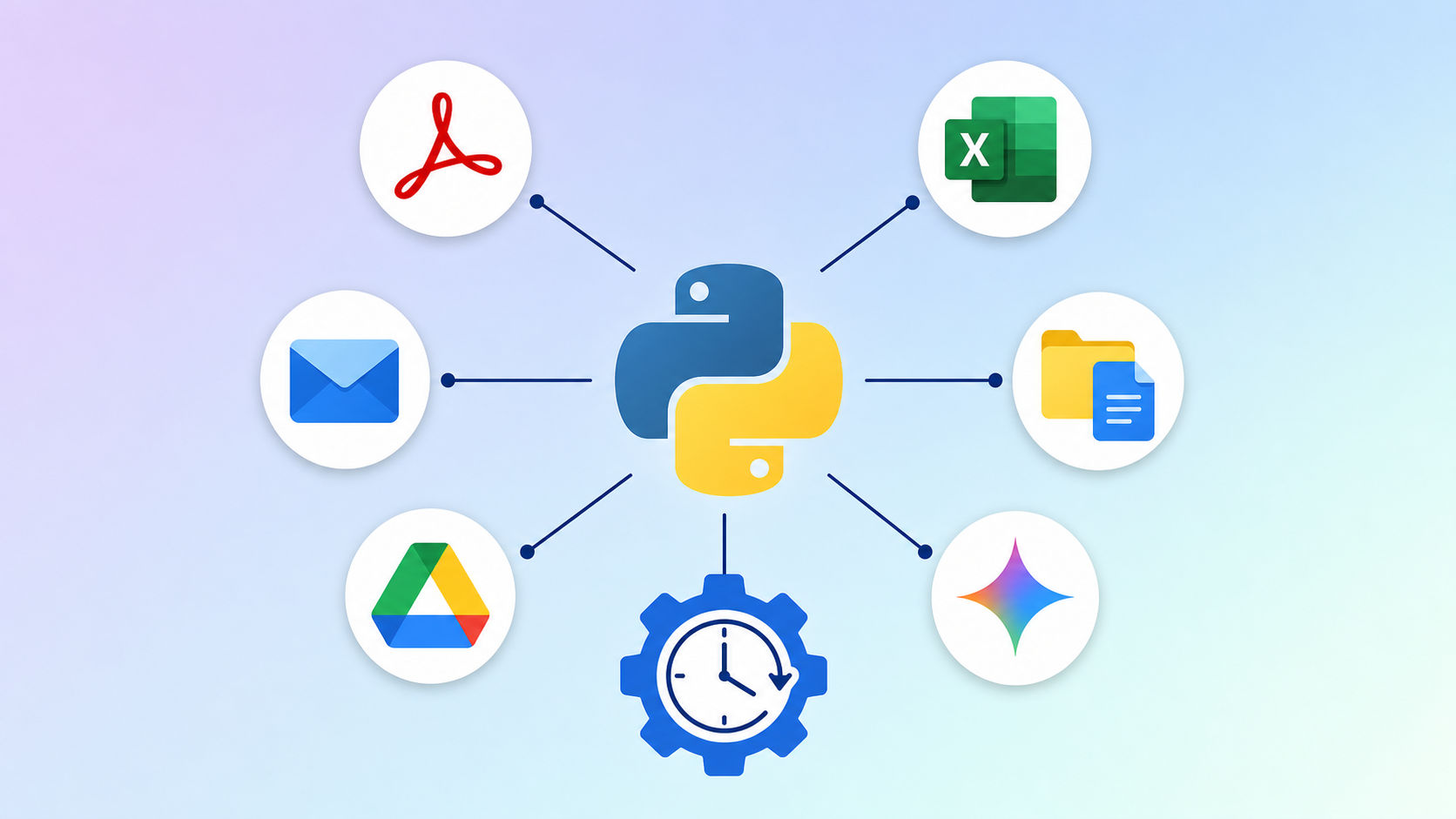
Python Automation Mastery
Learn to automate files, spreadsheets, PDFs, email, websites, APIs, desktop apps, and AI workflows—then schedule, package, and share what you build.
Always evolving: New lectures and hands-on projects are added regularly, so you can keep learning as automation tools and practices evolve.
What you'll learn
Create, rename, move, monitor, compress, and archive files.
Clean, format, merge, chart, and report on data.
Extract data, fill forms, merge documents, and generate reports.
Process inboxes, download attachments, and schedule reports.
Scrape websites, control browsers, and connect REST APIs.
Use advanced AI classification to turn invoices, emails, and other unstructured content into useful data.
Automate workflows when no API is available.
Schedule scripts and package them as apps or executables.
Beginner-friendly
If you are completely new to Python, you are covered. A dedicated Python Basics section is included at the end of the curriculum, so you can learn the fundamentals and revisit them whenever you need extra support.
Learn by building
Apply your skills to realistic automation challenges across files, spreadsheets, documents, email, websites, APIs, AI, and desktop applications.
And the course keeps growing: More hands-on automation projects are added regularly.
Why this course
Who is this for?
No computer-science background required. Python foundations are included, but you should be ready to write, test, and debug code.
Student experience
“I really enjoyed this Python automation course! The explanations were clear and easy to follow, and I was able to test things myself as I went along—trust but verify. I could understand the real-world applications through examples such as Excel automation, PDF automation, and handling errors in scripts. Overall, it’s a great course for beginners looking to get into automation!”
Questions, answered
No. Python foundations are included. If you already know the basics, you can move directly to the automation lessons.
No. It is designed for anyone who works with repetitive digital processes. You need curiosity and a willingness to code—not a computer-science degree.
Yes. You will build an AI invoice processor, a client-ready Streamlit app, and a personal finance reporting system.
16 sections · 146 lectures